
Built Like Infrastructure. Not a SaaS Black Box.
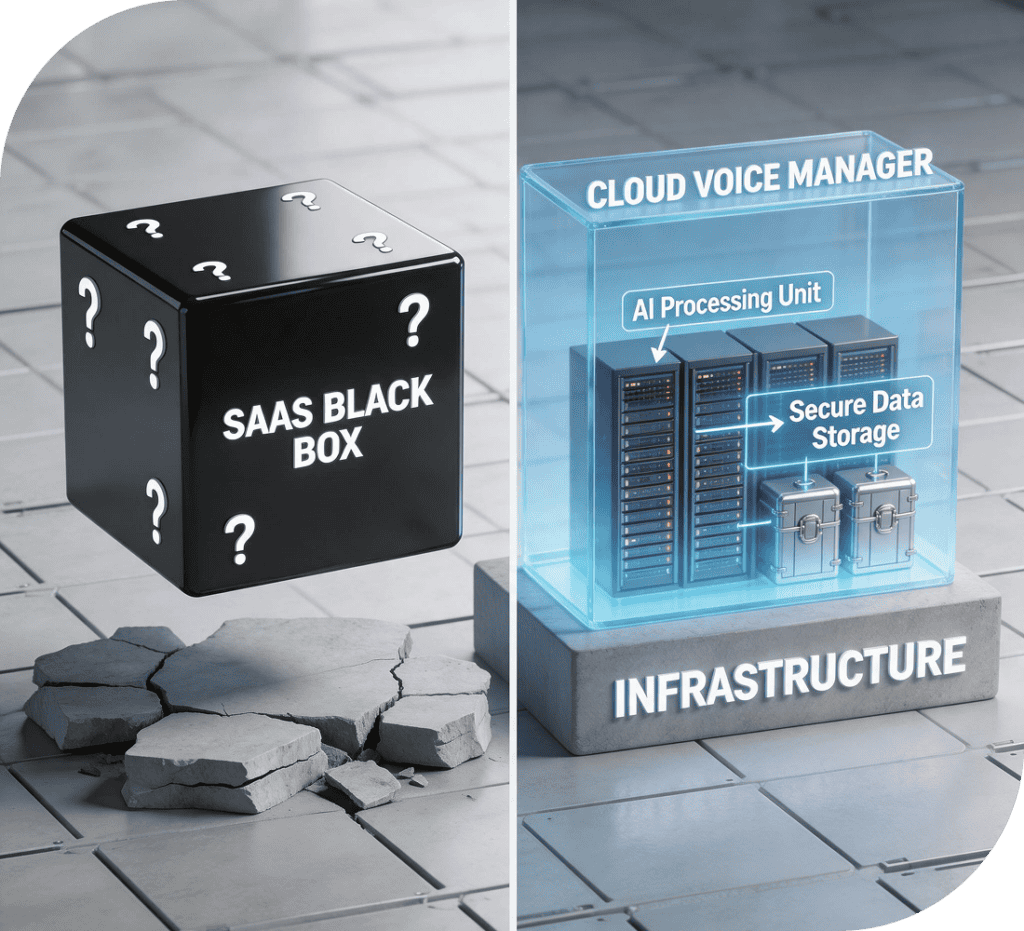
A Phone System Touches More Than Phones
The Platform Has Four Core Layers.
Telephony Layer
Telnyx provides carrier-grade SIP trunking, DID provisioning, SMS delivery, and media connectivity. This is the ingress and egress point for calls and messages.
Control and Routing Layer
Cloud Voice Manager manages extensions, queues, IVR logic, routing rules, number assignment, tenant scope, permissions, call state, and operational workflows.
AI and Transcription Layer
Deepgram handles speech-to-text in real time. Cloud AI Manager provides knowledge, prompts, and persona controls. Cloud Voice Manager orchestrates the live AI interaction.
Data and Business Context Layer
SALT CRM, HMS merchant context, recordings, transcripts, audit logs, SMS records, and reporting data provide the persistent business record of every interaction.
The architecture works because these layers are coordinated by design – not stitched together after deployment.
What Happens When a Call Comes In
Number Hit
An inbound DID routes through the Telnyx carrier layer into Cloud Voice Manager.
Tenant and Route Resolution
The platform identifies the tenant, number mapping, time-based rules, and the correct route path for that call.
Call Handling Decision
The route decides whether the call rings a user, hits a queue, enters IVR logic, reaches voicemail, or is answered by an AI voice agent.
Live Interaction
During the call, state changes are tracked in real time. Recording, transcription, AI orchestration, and queue logic all operate against the same active call context.
Transfer or Completion
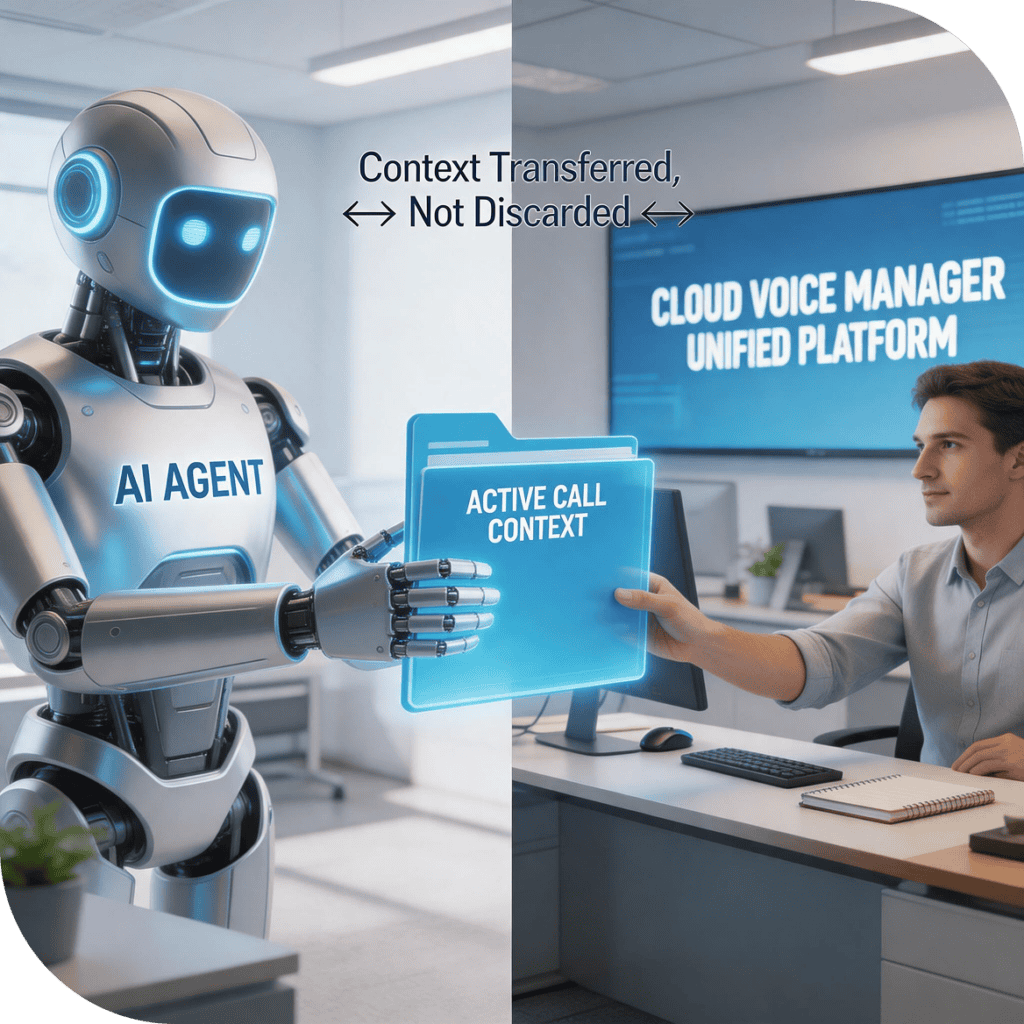
The call is either completed, transferred, escalated, or routed onward with the full context preserved.
Post-Call Writeback
Metadata, summary, transcript, disposition, and recording links are stored and synchronized to the right systems automatically.
Real-Time AI Without Breaking the Call Experience.
- The live caller audio stream is processed in real time
- Deepgram converts speech to text with sub-second latency
- Cloud Voice Manager passes the live transcript and call context into the AI orchestration layer
- Cloud AI Manager supplies persona, prompt, and knowledge context
- The AI response is generated based on live intent and business rules
- The caller hears a real-time reply, not a delayed post-processing result
- If a human transfer is required, the active context is handed off rather than discarded
The Conversation Becomes a Business Record Automatically.
When a call ends, Cloud Voice Manager turns the live interaction into structured data
that the rest of the business can use.
Call Detail Record
Finalized with route path, duration, direction, and outcome
Recording Storage
Stored according to the deployment's retention policy
Transcript Indexed
Attached and indexed for search
CRM Sync
SALT CRM receives the activity record and linked assets
API Access
Webhooks and API-accessible objects available
Reporting Update
Layers update for supervisors, admins, and partners
Reporting Update
Layers update for supervisors, admins, and partners
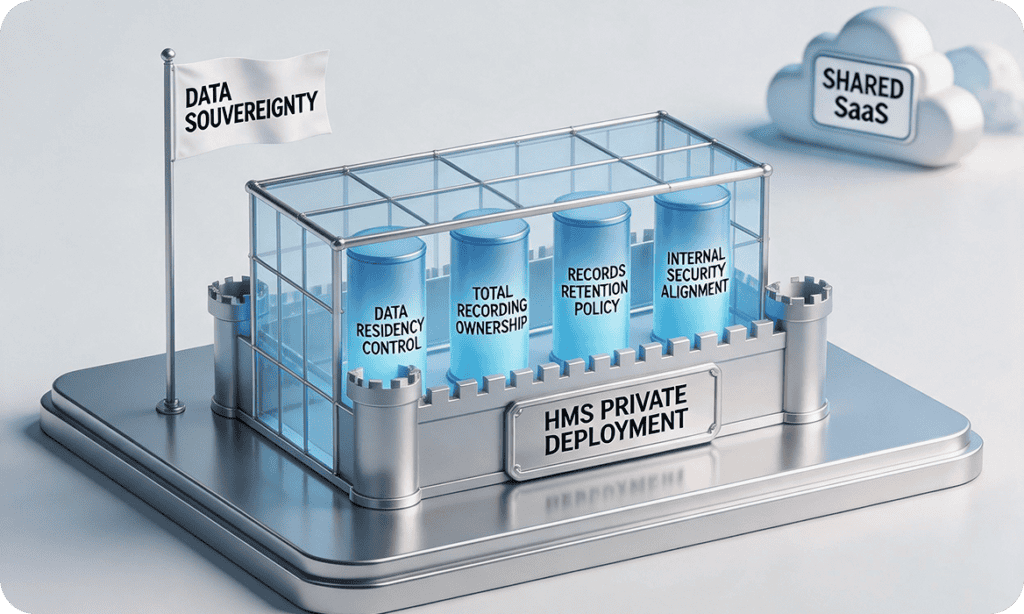
Self-Hosted by Design
What the Deployment Model Delivers:
- Control over data residency and storage policy
- Predictable scaling tied to your own infrastructure choices
- Freedom from per-seat SaaS licensing pressure
- Tighter control over recordings, backups, and retention
- Ability to align the communications stack with internal security requirements
For technical evaluators, this means fewer unknowns. For business buyers, it means more control and less vendor dependency.
One Core Platform. Clean Tenant Separation.
Isolation Happens at Multiple Layers:
Per-tenant routing, numbers, users, and permissions
Separate call history, recordings, transcripts, SMS threads, and voicemail stores
Independent AI personas, knowledge assignments, and business rules
Tenant-scoped administrative access
API and reporting boundaries enforced per tenants
Built to Stay Useful Under Load
Carrier-Grade Telephony
Through Telnyx
Predictable Call Handling
Queueing and routing logic designed for reliability
Real-Time Visibility
Through the live dashboard
Searchable Logs
Audit trails and reporting for investigation
Tenant-Scoped Controls
Prevent one environment from disrupting another
Flexible Retention
Storage controls to match operational needs
Transparent Architecture. Sensible Boundaries
What Stays Out of the Public Site:
Internal IP addresses and hostnames
Private ports and service discovery details
Environment-specific infrastructure maps
Sensitive credential flow details
Internal-only deployment procedures